
A boiler that keeps losing pressure is often the first warning before cold radiators, lockouts, or a no-heat morning.
If you keep refilling the system, the gauge drifts down overnight, or the boiler resets after short heating cycles, something in the hydronic loop needs attention. Pinette helps Attleboro and Bristol County homeowners sort safe homeowner checks from real repair work, then routes you into boiler repair or hydronic boiler maintenance without turning this article into a second service page.
Pressure dropping or heat already failing?
If the house is cold, the boiler will not stay running, or you see water at the boiler or relief valve, skip the research loop and request service for a repair visit.
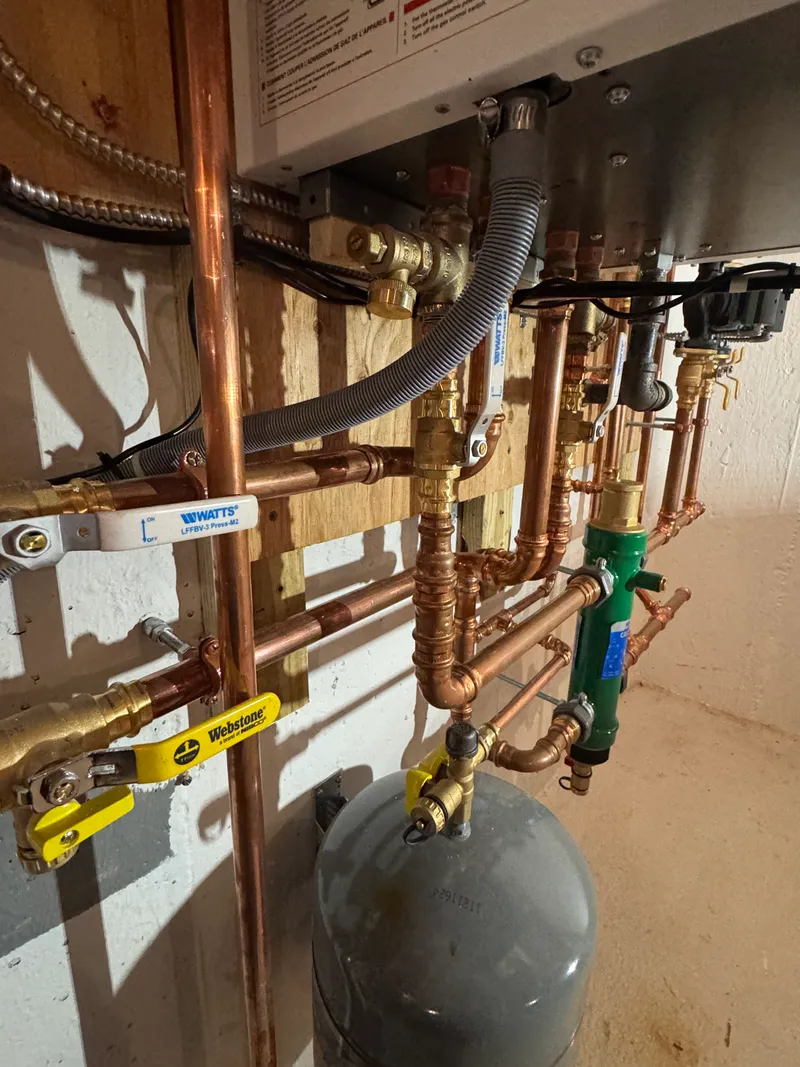
1Read the gauge before you keep refilling
Most sealed residential boilers use a pressure gauge near the unit. Many systems sit near 12–15 psi when cold and rise a bit once the water heats. Exact targets depend on the boiler and home, so treat those ranges as a common starting point—not a universal rule.
What the pattern usually means:
- Pressure stays stable after a normal fill: often air was bled or a one-time top-off was enough.
- Pressure falls again overnight or after a few heat cycles: look for a leak, relief-valve drip, or expansion-tank issue.
- Pressure climbs too high when hot and the relief valve opens: that can also point to expansion-tank or fill-control problems.
- Boiler locks out or radiators stay cold after refill: treat it as a repair visit, not another DIY fill.
If you smell gas, hear unusual burner noise, or see scorching around the boiler, leave the area and follow the gas emergency path instead of adjusting valves yourself.
2Check the common homeowner-safe clues
You do not need to open the boiler cabinet to gather useful clues. Focus on what you can see and hear around the system and the rooms it heats.
Clues that often explain pressure loss:
- ✓Drips under the boiler, pump, or fittings after the system has been running.
- ✓A relief valve that drips into a pan or floor drain when pressure climbs or the tank cannot absorb expansion.
- ✓Radiators that need frequent bleeding and still leave cold spots upstairs.
- ✓An auto-fill valve that keeps feeding water while the gauge will not hold.
- ✓Gurgling pipes or sudden short cycling after you have already bled the obvious radiators.
3Decide: repair, maintenance, or replacement talk
This page stays in the symptom stage. Use the owners below so you do not park a repair problem on a maintenance page—or turn a seasonal tune-up into an emergency.
Go to boiler repair when:
- •Pressure keeps dropping after refill.
- •Heat fails, lockouts repeat, or radiators stay cold.
- •You see active drips, relief-valve discharge, or wet insulation.
Boiler & furnace repair is the right commercial home for that visit.
Use maintenance when:
- •The boiler still heats the home and pressure holds.
- •You want seasonal cleaning, bleeding help, and a preventive check.
- •You are planning ahead before the coldest weeks, not mid-failure.
Start with hydronic boiler maintenance for that path.
If the boiler is aging, parts keep failing, or a tech says repair no longer makes sense, move the replacement conversation to heating installation—not this article. If the house is already cold and the boiler never started, use why your boiler won't kick on instead of treating it as another refill. If the gauge holds and only one radiator stays cold, use why one radiator is cold.
4What to do while you wait for a tech
Keep the home safe and gather a few notes so the visit starts faster. Do not keep forcing a boiler that will not hold pressure or that trips repeatedly.
Do this:
- •Photograph the cold and hot gauge readings if you can do so safely.
- •Note which radiators stay cold after bleeding.
- •Protect floors from any relief-valve drip and shut the system down if water is spreading.
Avoid this:
- •Repeatedly overfilling the system hoping the gauge will “settle.”
- •Bypassing safeties or ignoring a relief valve that keeps opening.
- •Treating a gas smell like a pressure issue—leave and call the utility path first.
When you are ready, request service and mention pressure loss, lockouts, cold zones, and any visible drips so the tech arrives prepared.
Boiler pressure FAQs
What pressure should my boiler gauge show when the system is cold?
Many residential hydronic systems sit near 12 to 15 psi when cold and rise somewhat when the system heats. Exact targets vary by boiler and home, so use your manufacturer guidance or a tech reading as the final word. The bigger warning is pressure that keeps falling after you refill or that trips the boiler offline.
Is it safe to keep refilling a boiler that loses pressure?
A one-time fill after bleeding radiators can be normal. If you have to refill often, pressure keeps dropping overnight, or the relief valve drips, stop treating refill as the fix and schedule boiler repair. Repeated resets without a diagnosis can hide a leak or expansion-tank problem.
When is boiler maintenance enough instead of a repair call?
Maintenance fits seasonal tune-ups, air bleeding, and preventive checks when the boiler still heats the home and pressure stays stable. Choose repair when pressure loss returns, heat fails, radiators stay cold after bleeding, or you see water at the boiler, expansion tank, or relief valve.
Final thoughts
A boiler that keeps losing pressure is a useful early warning, not a reason to keep guessing. Read the gauge pattern, note drips and cold radiators, protect the room from water, and move into repair when pressure will not hold—or maintenance when the system is still stable and you want a seasonal check. That keeps this article helpful without blurring the repair, maintenance, and installation pages.