
A puddle at the base of your water heater can mean anything from a small valve problem to a tank that is ready to fail completely.
If you are searching for why a water heater is leaking from the bottom, the most important thing is to figure out whether the leak is coming from a repairable part or from the tank body itself. Pinette Plumbing helps homeowners around Attleboro sort out that difference quickly so they can shut the unit down, limit water damage, and choose repair or replacement with clearer thresholds.
Likely a repair
Valve, fitting, or part leak
If water is coming from a drain valve, relief valve, or connection and the tank looks sound, start with water heater repair.
Likely a replacement
Tank body or bottom seam
If the leak is coming through the tank shell or lower seam, replacement is usually the safer next step.
Repair vs replace thresholds
- Tank body or bottom seam leak: treat as replacement. A rust-through hole in the tank cannot be patched in a lasting way.
- External drip (drain valve, T&P valve, or fitting) on a sound tank: start with water heater repair.
- Typical tank age: conventional storage heaters often last about 10 to 15 years, per the U.S. Department of Energy. A leak near that range, plus rust or weak recovery, usually favors water heater installation.
- Spreading water or gas nearby: shut power or gas off if you can do it safely, close the cold-water valve, and request service instead of waiting.
1Is it tank failure or something smaller?
Not every bottom leak means the whole heater is done. Water often runs down the jacket or pipes and collects near the base, making the leak look worse or more final than it really is. That is why the source matters more than the puddle.
Common sources that can mimic a tank leak:
- Drain valve seepage: A loose or aging drain valve can drip slowly and pool at the bottom of the tank.
- T&P relief valve discharge: If the heater is over-pressurizing or overheating, the relief valve can release water that runs down the side.
- Supply or outlet fittings: Loose threaded joints or flex connections can drip and follow the tank shell downward.
- Condensation: In humid conditions, some gas water heaters can create moisture that looks like a leak during recovery cycles.
The more serious version is when rust, corrosion, or mineral damage has eaten through the tank or bottom seam. Once that happens, patching the unit is usually not worth it. The safer and more durable move is a replacement. Pinette covers both paths through our water heater repair and water heater replacement services.
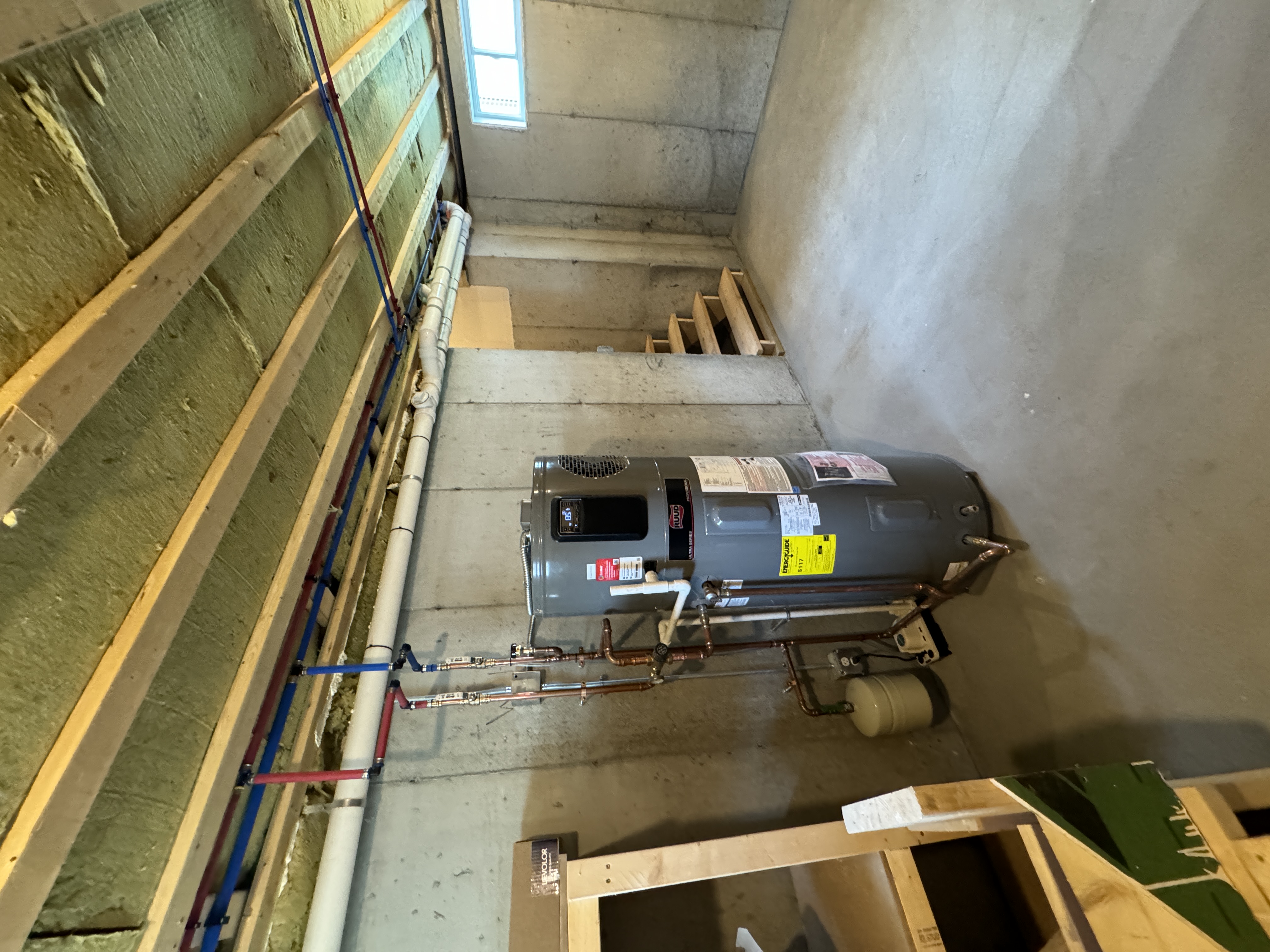
2What to do right away
When you spot leaking at the bottom of a water heater, do not assume it will stay small. A slow drip can turn into a fast floor leak without much warning, especially on an older tank. The goal is to limit water damage and avoid adding heat or pressure to a failing unit.
First steps homeowners can take:
- Shut off power at the breaker for electric units, or turn the gas control to the off position if you can do it safely.
- Close the cold-water shutoff valve above the heater to slow or stop the leak.
- Move storage boxes, rugs, and anything moisture-sensitive away from the area.
- If the leak is active, spreading, or near gas piping, call for professional help instead of waiting it out.
- Do not cap or plug a temperature-and-pressure relief valve. If that valve is discharging, treat it as a safety issue and request service.
If you see rusty water, hear rumbling, or notice the heater is already near the end of its expected life, treat the leak as a sign that the system needs a closer look right away. Attleboro homeowners often wait too long because hot water is still working, but a leaking tank can fail before total loss of hot water shows up.
3When repair still makes sense
Repair can still be a smart choice when the leak is coming from a serviceable part and the tank itself is in solid shape. That often applies when the unit is not overly old, corrosion is limited, and the water heater has otherwise been performing normally.
Repair is more likely when:
- •The leak is traced to the drain valve, relief valve, or a visible connection.
- •The heater is well under typical 10 to 15 year tank life, with little rust and otherwise normal recovery.
- •There are no signs of tank seam failure, collapsed insulation, or chronic water damage.
Pinette’s repair-first approach:
If the tank is sound, our team can address common issues such as valves, controls, heating elements, thermostats, or other components that are causing the problem. The goal is to restore dependable hot water without pushing replacement before it is actually necessary.
That same repair-versus-replace judgment is a big part of our day-to-day water heater repair work. When the leak is not structural, it often makes sense to correct the failure and buy more useful life from the system.
4When replacement is the better call
If the leak is coming from the tank body, the bottom seam, or deep corrosion around the base, replacement is usually the better path. The same goes for tanks already near typical storage-heater life—often about 10 to 15 years, per the U.S. Department of Energy—especially when rust, heavy sediment noise, repeated breakdowns, or poor recovery showed up before the leak.
Signs replacement is probably the right move:
- Water is seeping from the tank shell or lower seam, not from an external fitting.
- The heater is near typical tank age or already showing multiple symptoms like rust, popping, weak recovery, or repeated part failures.
- The cost of repair does not buy real confidence, especially if another leak or no-hot-water call is likely soon.
When replacement is the better call, Pinette walks homeowners through tank size, recovery rate, fuel type, venting needs, and whether a standard tank or tankless option fits the home. If that is where your situation is headed, our water heater installation page explains the next step in more detail.
How Attleboro homeowners usually decide
The best answer is not always "repair" or always "replace." It depends on where the leak is, how old the heater is, how well it has been keeping up, and whether the homeowner wants the least expensive immediate fix or the most reliable long-term result.
Practical rule of thumb
If the tank itself is leaking, replacement is usually the smart move. If the leak is external, the tank is sound, and the heater is not already near typical 10 to 15 year storage-heater life, repair may still make very good sense.
That is why many homeowners call as soon as they notice the first puddle. Getting clear guidance early often means less floor damage, less downtime, and a better chance of choosing the right fix without pressure.
Water heater leak FAQs
Does a water heater leaking from the bottom always mean the tank is bad?
No. Water can collect at the base because of a leaking valve, relief line discharge, condensation, or a connection higher up on the heater. But if the tank shell or bottom seam is leaking, replacement is usually the right answer.
What should I do first if my water heater is leaking?
Shut off power or gas if it is safe to do so, close the cold-water supply valve, protect nearby belongings, and call for help if the leak is active or growing. A leaking water heater can go from nuisance to emergency quickly.
When can a leaking water heater still be repaired?
Repair can still make sense when the tank is sound and the leak is coming from an external part such as the drain valve, relief valve, or a loose fitting. Once the tank itself is leaking, repair is rarely a lasting solution.
Does water heater age change the repair-versus-replace decision?
Yes. Conventional storage water heaters often last about 10 to 15 years. An external drip on a younger, otherwise sound tank can still be a repair. A tank-body or bottom-seam leak, or a leak on a heater already near that age with rust and weak recovery, usually points to replacement.
Final thoughts on a leaking water heater
A water heater leaking from the bottom is not something to ignore. Use the thresholds above: tank-body leaks and late-life tanks usually go to replacement, while an external drip on a sound younger tank can still be a repair. If you are not sure which one you are dealing with, Pinette Plumbing can help you sort it out on site.